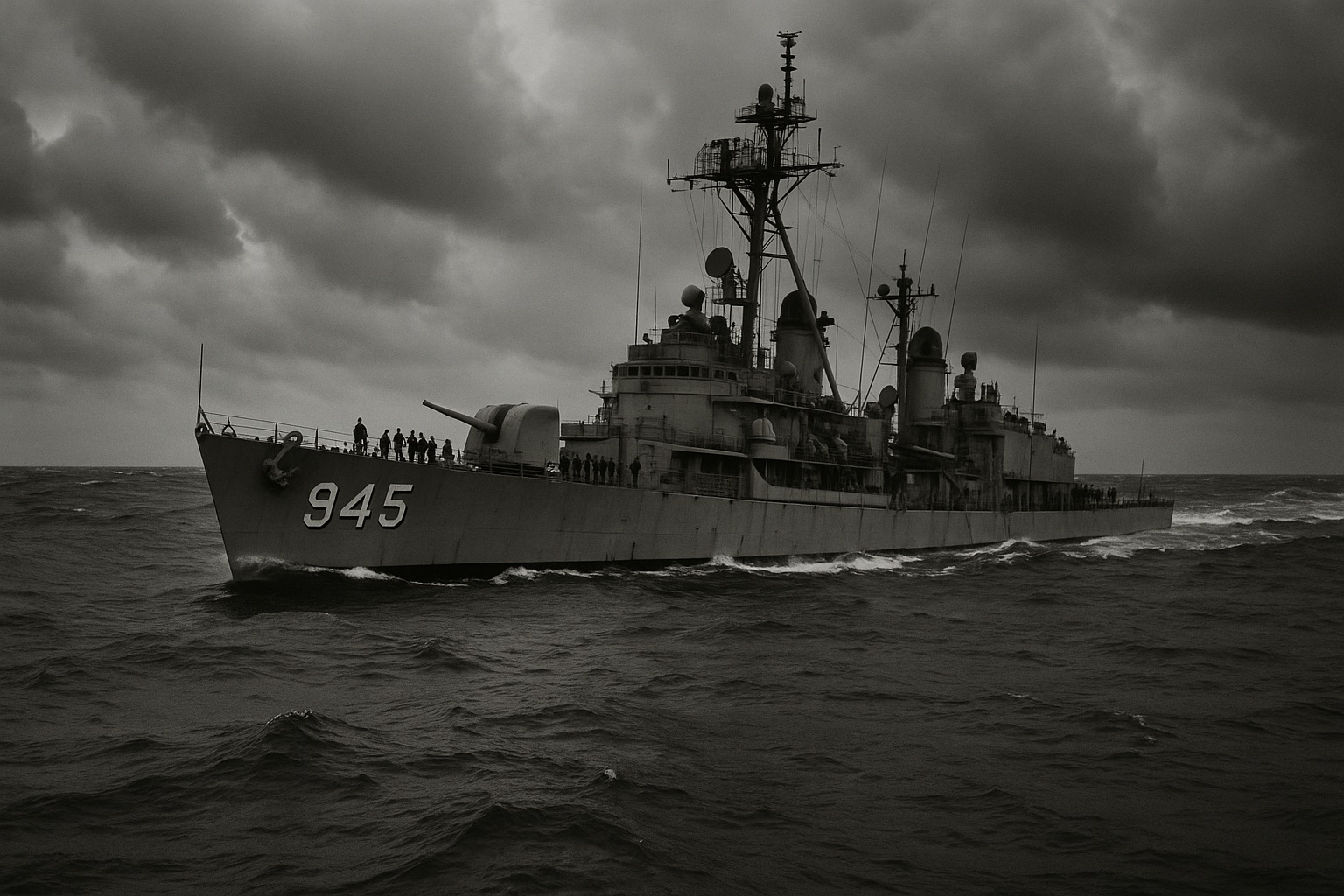
 AI-generated
How Close the Cuban Missile Crisis Actually Came to Nuclear War
It's cited constantly as the closest the world came to nuclear war. Declassified records since show it was closer, and for different reasons, than the story taught for decades.
What happened
On October 14, 1962, a US U-2 spy plane photographed Soviet medium-range ballistic missile sites under construction in Cuba. President John F. Kennedy convened a small group of advisors, later called the Executive Committee of the National Security Council (ExComm), to weigh options in secret over the following days.
Kennedy addressed the nation on October 22, 1962, revealing the missiles' existence and announcing a naval "quarantine" of Cuba — a blockade in substance, though the US avoided that legal term since a blockade is an act of war. The Joint Chiefs of Staff pushed for airstrikes and invasion; Kennedy chose the quarantine instead.
The crisis peaked October 27, 1962 — a day historians call "Black Saturday": a US U-2 was shot down over Cuba, killing pilot Major Rudolf Anderson; a separate U-2 accidentally strayed into Soviet airspace over Siberia; and, unknown to Washington at the time, a Soviet B-59 submarine, cut off from communication and under depth-charge fire from US destroyers enforcing the quarantine, came within one dissenting officer's vote of launching a nuclear torpedo (see below).
The crisis ended October 28, 1962, when Soviet Premier Nikita Khrushchev agreed to remove the missiles in exchange for a public US pledge not to invade Cuba — and a secret, unpublicized agreement that the US would remove its Jupiter missiles from Turkey within months. The Turkey trade was denied publicly for decades and only confirmed later through participants' accounts and declassified records.
What declassified records added to the official story
For years the standard account, shaped by participants like Robert Kennedy's posthumously published memoir Thirteen Days (1969), downplayed the secret Turkey-missiles trade and presented the resolution as Soviet capitulation to firm US resolve. Declassified ExComm tape recordings and Soviet archives, opened progressively from the 1990s through conferences involving US, Soviet, and Cuban participants, substantially revised this.
The submarine incident became widely known only decades later: Soviet submarine B-59, part of a flotilla the US did not know carried nuclear-tipped torpedoes, was being depth-charged by US Navy vessels enforcing the quarantine and lost contact with Moscow. Its captain and political officer believed war might have already started and wanted to launch. Under Soviet submarine protocol, launch required agreement from all three senior officers aboard; second-in-command Vasili Arkhipov refused consent, and the torpedo was not fired. This account entered the historical record mainly through a 2002 conference in Havana marking the crisis's 40th anniversary, attended by American, Russian, and Cuban veterans of the events.
What's disputed
Historians disagree on how close the crisis actually came to nuclear war in a meaningful sense, versus how close in a narrower technical sense. Some, emphasizing the submarine incident and the number of independent miscalculations converging on October 27, argue the crisis came within a single individual's judgment call of escalating uncontrollably. Others argue that Kennedy and Khrushchev both maintained enough back-channel control (via Robert Kennedy's meetings with Soviet ambassador Anatoly Dobrynin) that the risk of an intentional US or Soviet decision to go nuclear was lower than the "near-miss" framing suggests, even if the risk of an accidental or unauthorized escalation was real.
There's also continuing debate over whether the public "US firmness forced Soviet capitulation" narrative that dominated Cold War-era retellings was itself a deliberate framing choice by the Kennedy administration to obscure the Turkey trade and avoid looking like it had negotiated under pressure — a question that bears on how much of Cold War crisis diplomacy generally was compromise dressed up as resolve.
What we know
- The publicly resolved deal (no invasion of Cuba, for removal of the missiles) was not the whole deal — a secret US commitment to remove Jupiter missiles from Turkey was also part of it, and was denied for years.
- A Soviet submarine came within one officer's refusal of firing a nuclear torpedo at US ships on October 27, 1962 — an incident not part of the standard account until it surfaced at a 2002 conference.
- Multiple independent, uncoordinated near-misses (the U-2 shootdown, the strayed U-2, the submarine standoff) converged on the same single day.
What's disputed
- Whether the crisis came close to nuclear war through leadership brinkmanship, or close to an accidental/unauthorized escalation despite both leaders trying to avoid war.
- How much the well-known "firmness won" narrative was accurate versus a framing that concealed a real US concession.
What it means
- Citing the Cuban Missile Crisis as proof that resolve/deterrence works, or as proof that nuclear crises are dangerously close to accident, both have real evidence behind them — the record supports both readings depending on which part of it you weight.